Article
The Quiet Triumph of Model-Based Systems Engineering
On this page
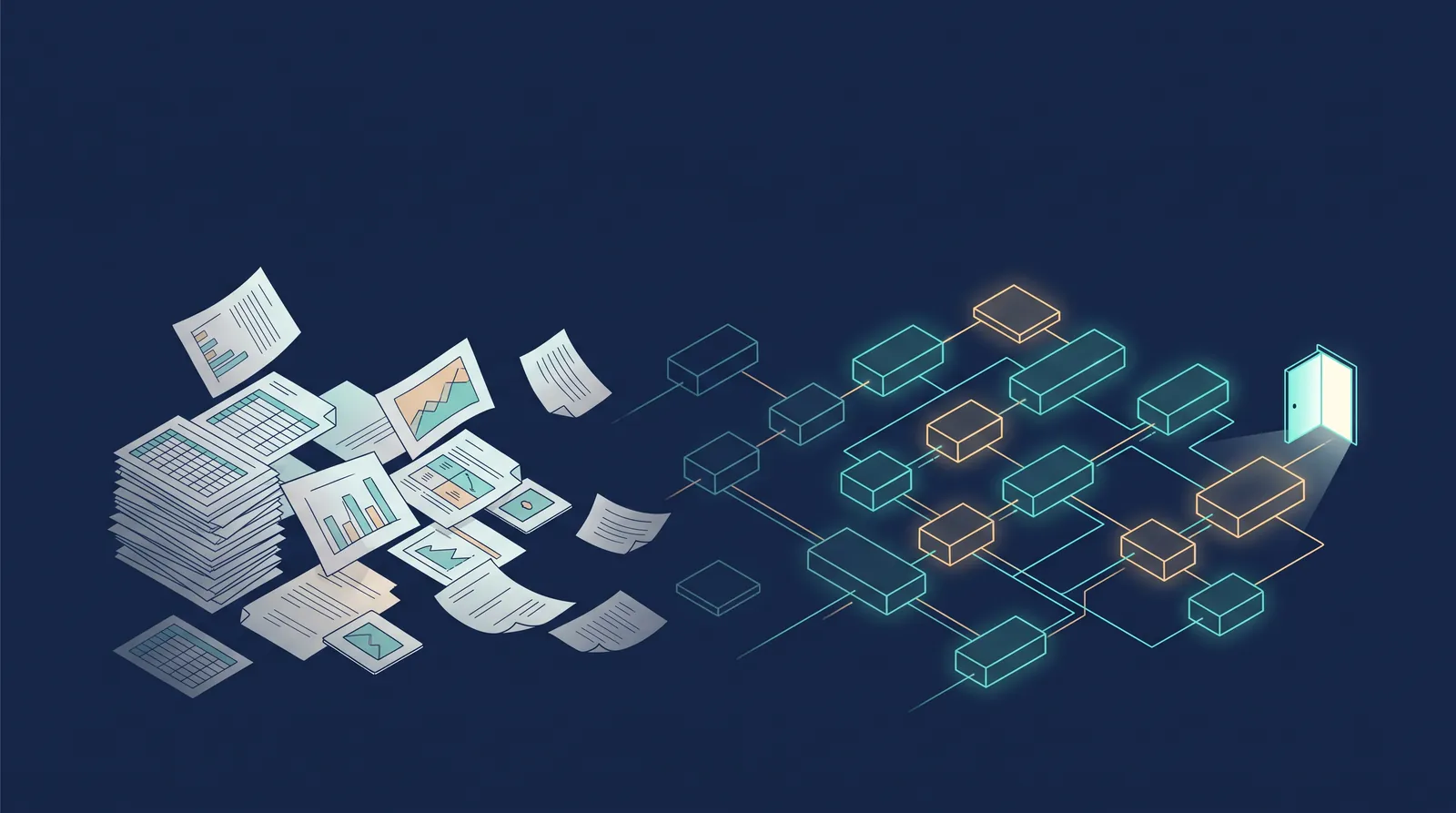
For most of engineering history, a system lived in documents. Requirements in one specification, interfaces in another, the architecture in slide decks, test plans in spreadsheets. Each document was a snapshot, and each was a little out of date the moment someone changed another one. Keeping them consistent was manual work, and asking "what does this change affect?" meant an afternoon of searching.
Model-based systems engineering (MBSE) proposed a simple reversal: make the model the source, and let documents become views of it. For years that idea had plenty of skeptics. The tools were heavy, the languages took specialists to learn, and the culture of the document was hard to move.
That debate is largely over. Not because diagrams won a beauty contest, but because the alternative stopped scaling.
The signals are hard to miss
Defense made it policy. The U.S. Department of Defense's Digital Engineering Strategy, released in 2018, set five goals for transforming how systems are engineered. The first is to formalize the development, integration and use of models to inform enterprise and program decisions; the second, to provide an enduring, authoritative source of truth.
The profession set its direction. INCOSE's Systems Engineering Vision 2035 describes a future in which systems engineering is predominantly model-based, integrated with simulation and visualization.
The language grew up. In 2025 the Object Management Group (OMG) approved the final adoption of SysML v2, with a precise textual notation alongside diagrams and a standard API for tools to exchange models. Models are no longer locked inside the tool that drew them.
When defense acquisition, the profession's own society and the standards body all point the same way, it's no longer a trend. It's the direction of travel.
Why models won
Consistency by construction. In a model, a requirement exists once. Every diagram, table and document that shows it shows the same thing. Change it once and every view is current.
Traceability that stays true. Links from needs to requirements, to functions, to physical elements, to tests are part of the model, not a matrix maintained by hand. The impact of a change is a query, not a meeting.
Analysis earlier. A model can be checked, simulated and compared before hardware exists. Missing interfaces, unverified requirements and timing conflicts show up while they are still cheap to fix.
A shared picture. Engineers, managers and customers look at the same structure from different angles. Reviews become about the system, not about which version of a document is the right one.
Reuse. Well-built model elements carry into the next variant, the next program and the next proposal.
The tools haven't caught up
The method won. Access to it hasn't.
Most MBSE tools were built for large programs, and it shows:
- Cost. Licenses are priced for enterprises with tool budgets. That's out of reach for a small supplier, a startup, a university course or an engineer who wants to learn on their own.
- Installation and administration. Heavy desktop installs, license servers and IT involvement before anyone draws a single block.
- A steep climb. Interfaces that assume weeks of training, so modeling becomes the job of one specialist instead of a shared practice.
- Closed models. Work that lives in one vendor's format, hard to share with a customer or a partner who uses something else.
- Accessibility as an afterthought. Diagram-heavy tools often work poorly with screen readers and keyboards, which shuts out engineers who rely on them.
The result is a gap. The organizations that most need the discipline, the small teams with the least margin for late surprises, are the ones least able to use the tools built for it. When modeling is expensive and hard, it stays with the few, and the model stops being the shared source of truth it's meant to be.
What we're building with Holarch
Holarch exists to close that gap. Our aim is simple: model-based systems engineering that any engineer, on any team, can actually use.
- Open a browser and start. Nothing to install, no license server, no IT ticket.
- A free plan, and paid plans priced for individuals and small teams, not only enterprises.
- Both languages in one tool. LML for teams that want an approachable start, SysML v2 for programs that need its rigor, with the text and the diagrams kept in step.
- Built to be learned. Guided tutorials, built-in help, and AI assistance that explains, suggests and checks. Every AI change is previewed before it's applied.
- Your model, not a silo. Import from the spreadsheets and documents you already have, export to the formats your customers expect, and collaborate in real time.
- Accessible by design. Keyboard reach and screen-reader support are tested on every release, not added later.
Systems engineering shouldn't depend on the size of your tool budget. The triumph of MBSE will only be complete when the method is in reach of everyone who builds complex things.
The bottom line
MBSE didn't win in a single moment. It won quietly, program by program, as teams found that a model answered questions documents couldn't. The question now is no longer whether to adopt it, but whether everyone can.
References
- Office of the Deputy Assistant Secretary of Defense for Systems Engineering, "Digital Engineering Strategy," U.S. Department of Defense, June 2018.
- INCOSE, "Systems Engineering Vision 2035," 2022.
- Object Management Group, "Object Management Group Approves Final Adoption of the SysML v2 Specification," July 21, 2025.
- Lifecycle Modeling Organization, "Lifecycle Modeling Language (LML) specification."
Try Holarch free at holarch.app.